
#000 – It Started With a Steering Wheel
How a Logitech G29 and a random question became the starting point for ISLAND RUNNERS.
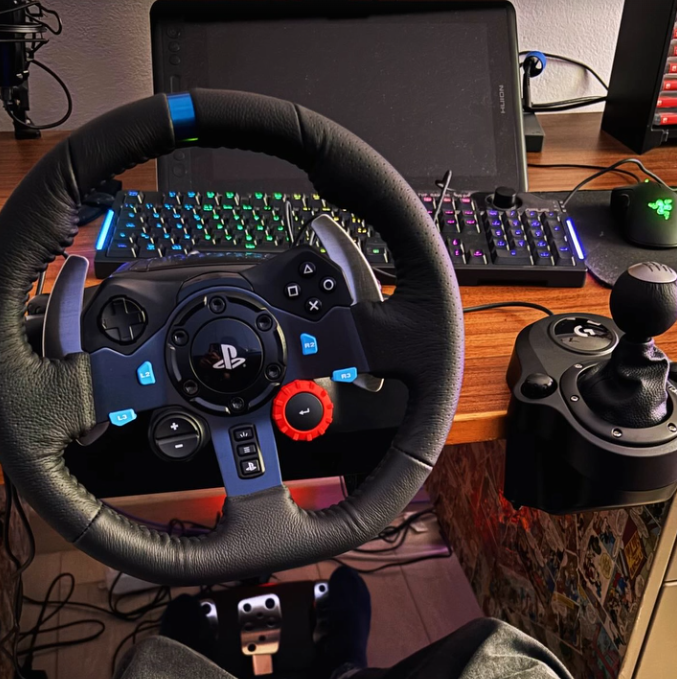
One purchase, no big plan
A while ago, I bought a Logitech G29 steering wheel, complete with pedals and an H-pattern shifter, to use with my PC.
I wasn’t planning to develop a video game with it. I simply wanted to try a different driving experience, something more physical than using a traditional controller.
One of the references that caught my attention was Euro Truck Simulator 2, a game where driving isn’t necessarily about competing. It’s also about travelling, exploring landscapes and reaching destinations.
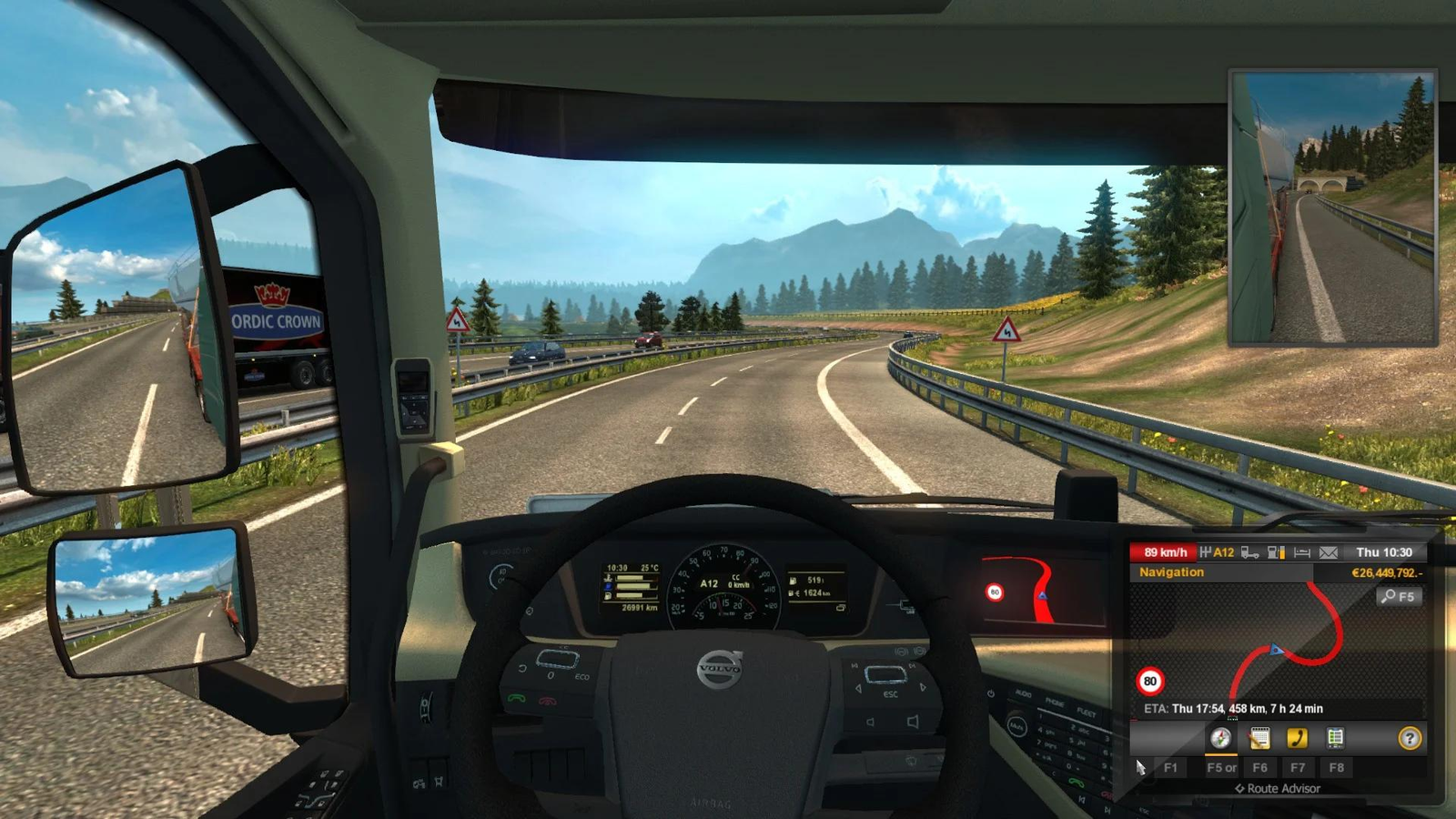
And that particular aspect got me thinking.
What if I developed a game designed entirely around this kind of input?
I didn’t want to make a racing game.
When we think of a PC steering wheel, we probably imagine a simulator or a racing game.
But I was interested in something else.
I wanted driving to become the center of a broader experience, where exploring, discovering places and interacting with the world would be just as important as the vehicle itself.
That’s where the idea for ISLAND RUNNERS came from: an explorable island, a network of roads and a pickup truck accompanying the player throughout the adventure.
The most important decision came almost immediately: everything would happen through the vehicle.
No character to control on foot, no constantly switching between the steering wheel and a controller.
It’s a challenging design constraint, but it’s also what makes the idea interesting to me.
Why low-poly?
As a solo developer working on a personal project, I knew I needed to choose a sustainable artistic direction.
Building an entire island, its environments, vehicles and props takes time. A low-poly approach allows me to focus on shapes, colors and readability while reducing some of the production complexity.
But it’s not just about optimization or saving time.
I genuinely love the low-poly aesthetic.
Simple geometry, recognizable silhouettes, flat colors and the possibility of creating a strong visual identity without relying on photorealism are all things I particularly enjoy.
I didn’t want to choose an art style simply because it was easier to produce. I wanted something I would actually enjoy creating and looking at.
ISLAND RUNNERS was born from the combination of two personal interests: driving as an experience and building stylized 3D worlds.
I don’t know exactly where this road will lead yet, but I want to document the journey, from the earliest ideas to the experiments, including the mistakes along the way.
This is mile zero.
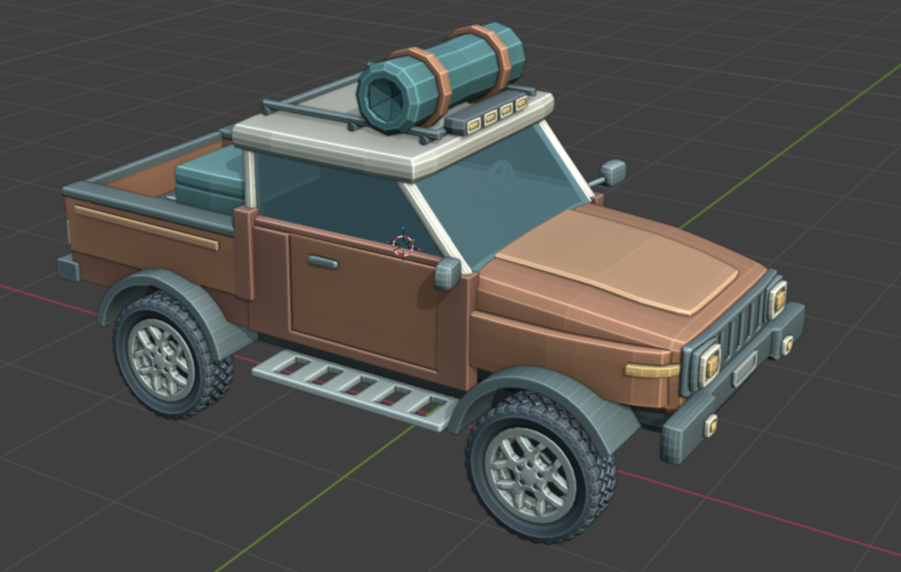
NEXT STOP / 001
Building the First Pickup.
From the first Blender model to the flat-color approach: how I started building the main vehicle of ISLAND RUNNERS.
#000 – It Started With a Steering Wheel
How a Logitech G29 and a random question became the starting point for ISLAND RUNNERS.
One purchase, no big plan
A while ago, I bought a Logitech G29 steering wheel, complete with pedals and an H-pattern shifter, to use with my PC.
I wasn’t planning to develop a video game with it. I simply wanted to try a different driving experience, something more physical than using a traditional controller.
One of the references that caught my attention was Euro Truck Simulator 2, a game where driving isn’t necessarily about competing. It’s also about travelling, exploring landscapes and reaching destinations.
And that particular aspect got me thinking.
What if I developed a game designed entirely around this kind of input?
I didn’t want to make a racing game.
When we think of a PC steering wheel, we probably imagine a simulator or a racing game.
But I was interested in something else.
I wanted driving to become the center of a broader experience, where exploring, discovering places and interacting with the world would be just as important as the vehicle itself.
That’s where the idea for ISLAND RUNNERS came from: an explorable island, a network of roads and a pickup truck accompanying the player throughout the adventure.
The most important decision came almost immediately: everything would happen through the vehicle.
No character to control on foot, no constantly switching between the steering wheel and a controller.
It’s a challenging design constraint, but it’s also what makes the idea interesting to me.
Why low-poly?
As a solo developer working on a personal project, I knew I needed to choose a sustainable artistic direction.
Building an entire island, its environments, vehicles and props takes time. A low-poly approach allows me to focus on shapes, colors and readability while reducing some of the production complexity.
But it’s not just about optimization or saving time.
I genuinely love the low-poly aesthetic.
Simple geometry, recognizable silhouettes, flat colors and the possibility of creating a strong visual identity without relying on photorealism are all things I particularly enjoy.
I didn’t want to choose an art style simply because it was easier to produce. I wanted something I would actually enjoy creating and looking at.
ISLAND RUNNERS was born from the combination of two personal interests: driving as an experience and building stylized 3D worlds.
I don’t know exactly where this road will lead yet, but I want to document the journey, from the earliest ideas to the experiments, including the mistakes along the way.
This is mile zero.
NEXT STOP / 001
Building the First Pickup.
From the first Blender model to the flat-color approach: how I started building the main vehicle of ISLAND RUNNERS.