
Modular Gothic Architecture
Building a reusable Gothic architecture kit through procedural modelling, trim sheets and real-time iteration.
Overview
This project began as a small modelling exercise inspired by a video showing the construction of a Gothic arch in Blender.
My first version focused entirely on shape and ornamentation. The result was visually interesting, but it was also extremely dense, difficult to edit and unsuitable for a real-time environment.
Instead of treating it as a finished standalone asset, I used it as the starting point for a broader technical study: how could I preserve the visual identity of Gothic architecture while turning it into a modular, reusable and game-ready system?
The final workflow combines modular modelling, procedural experimentation, a shared trim sheet and continuous testing inside Unreal Engine 5.
Workflow
01 – Starting from the Shape
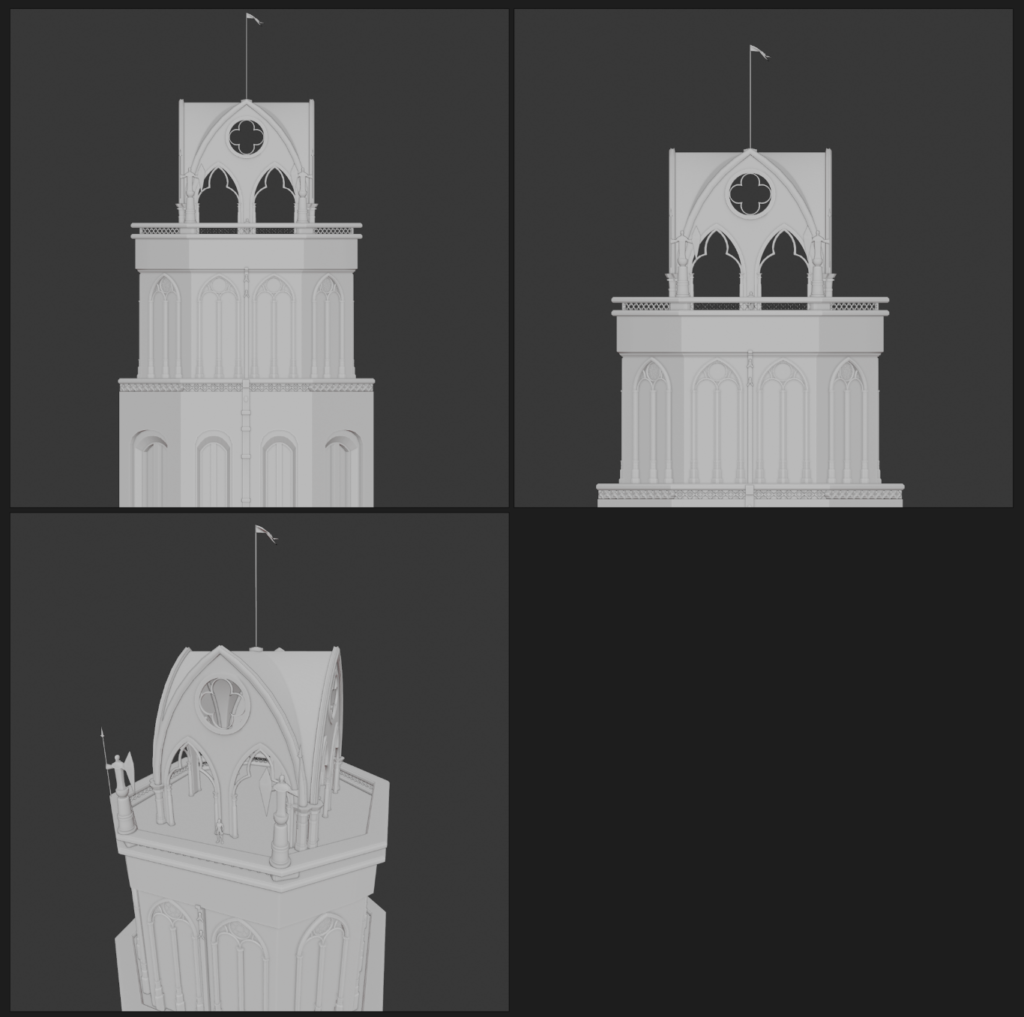
The project started with the silhouette of a Gothic arch.
At this stage, I was mainly interested in understanding how pointed arches, repeated frames and decorative layers could be constructed in Blender.
I worked freely, prioritising the visual result rather than topology or performance.
This approach helped me study the architecture, but it also produced a very dense asset composed of several overlapping details.
02 – The First Unreal Engine Test
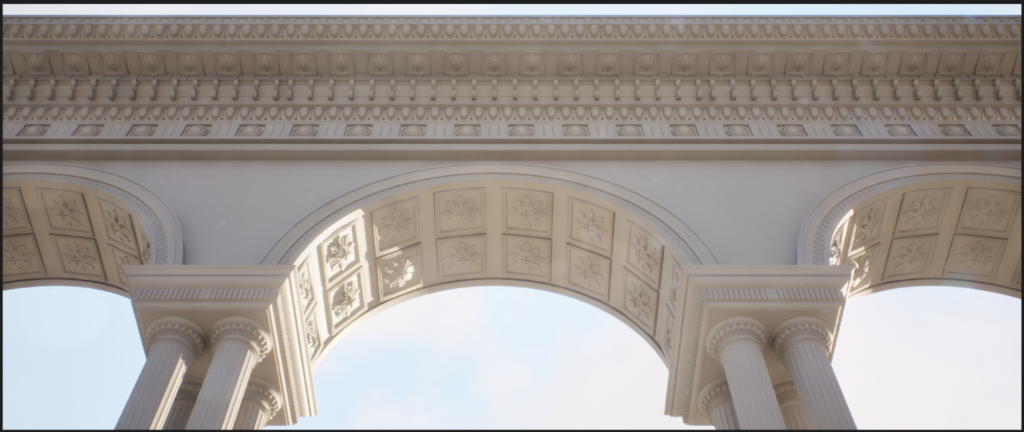
Although the first model was still high-poly and unoptimised, I imported it into Unreal Engine 5.
Testing the asset in engine immediately gave me information that was difficult to judge inside the modelling software alone.
I could evaluate its scale, silhouette, depth and behaviour under real-time lighting.
More importantly, this test exposed the main limitation of the original workflow: the asset worked as an isolated piece, but it was not flexible enough to support an entire environment.
03 – From Asset to Modular System
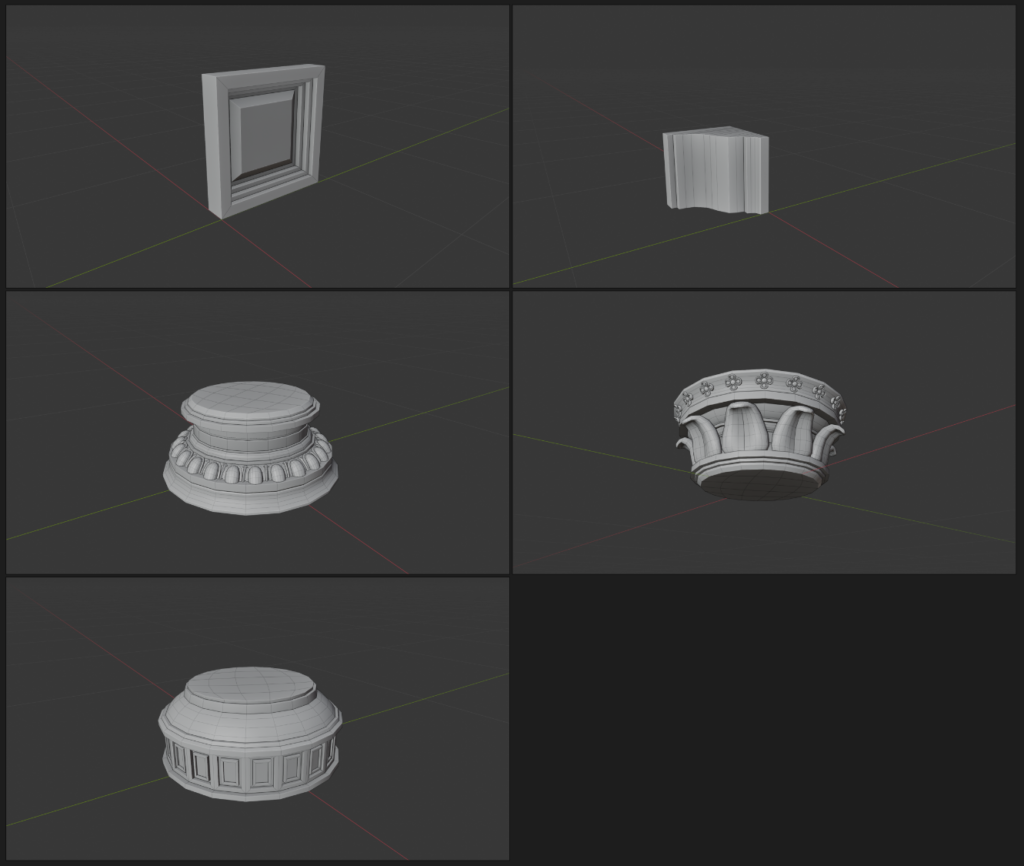
I began rebuilding the architecture as a collection of reusable components.
Instead of modelling every structure as a unique object, I separated the design into architectural modules that could share dimensions, materials and connection points.
This changed the way I approached the project. I was no longer designing only one Gothic arch;
I was defining a visual language that could be reused to create multiple architectural configurations.
Working with consistent proportions also made the pieces easier to assemble, replace and iterate on inside the engine.
04 – Exploring Geometry Nodes
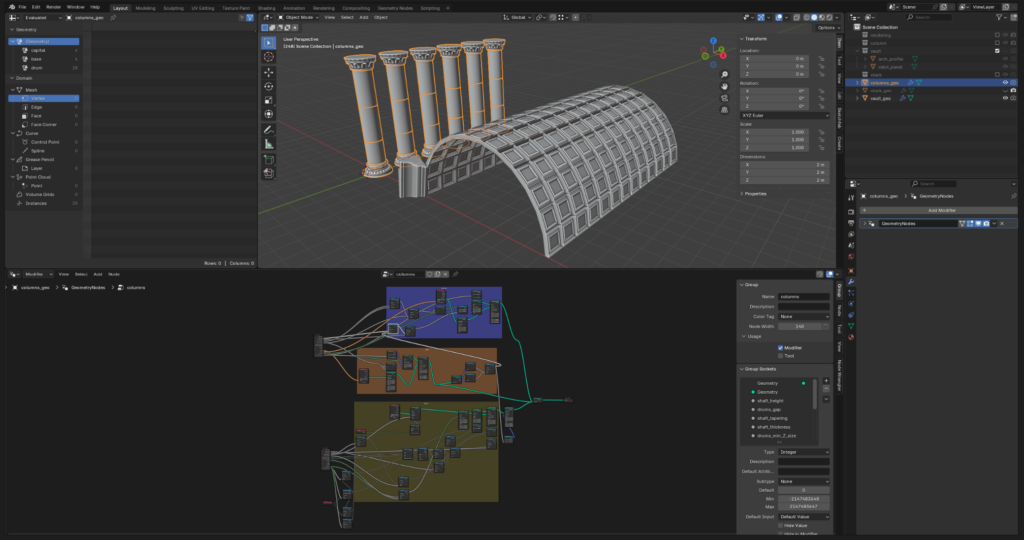
The project also became an opportunity to explore Geometry Nodes and procedural modelling.
Gothic architecture contains many repeated elements and proportional relationships.
Rebuilding each variation manually would have made the workflow slow and difficult to maintain.
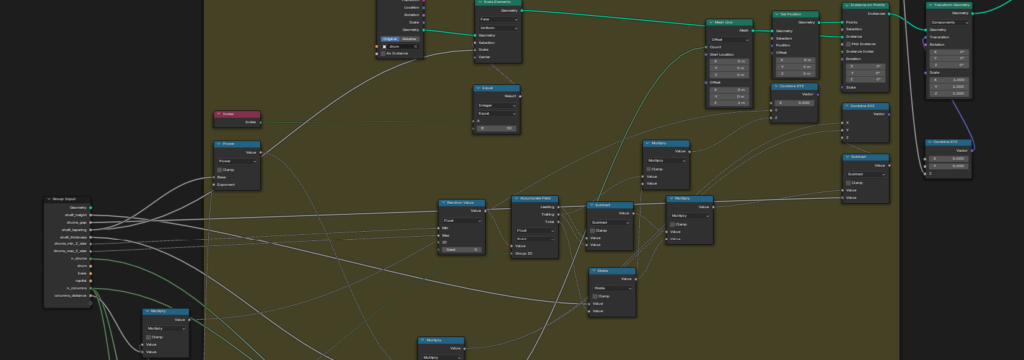
I therefore started experimenting with procedural controls for repetition and shape variation.
The goal was not to automate the entire asset, but to identify the repetitive parts of the process and make them faster to edit.
This allowed me to approach modelling less as a sequence of isolated operations and more as the construction of a reusable system.
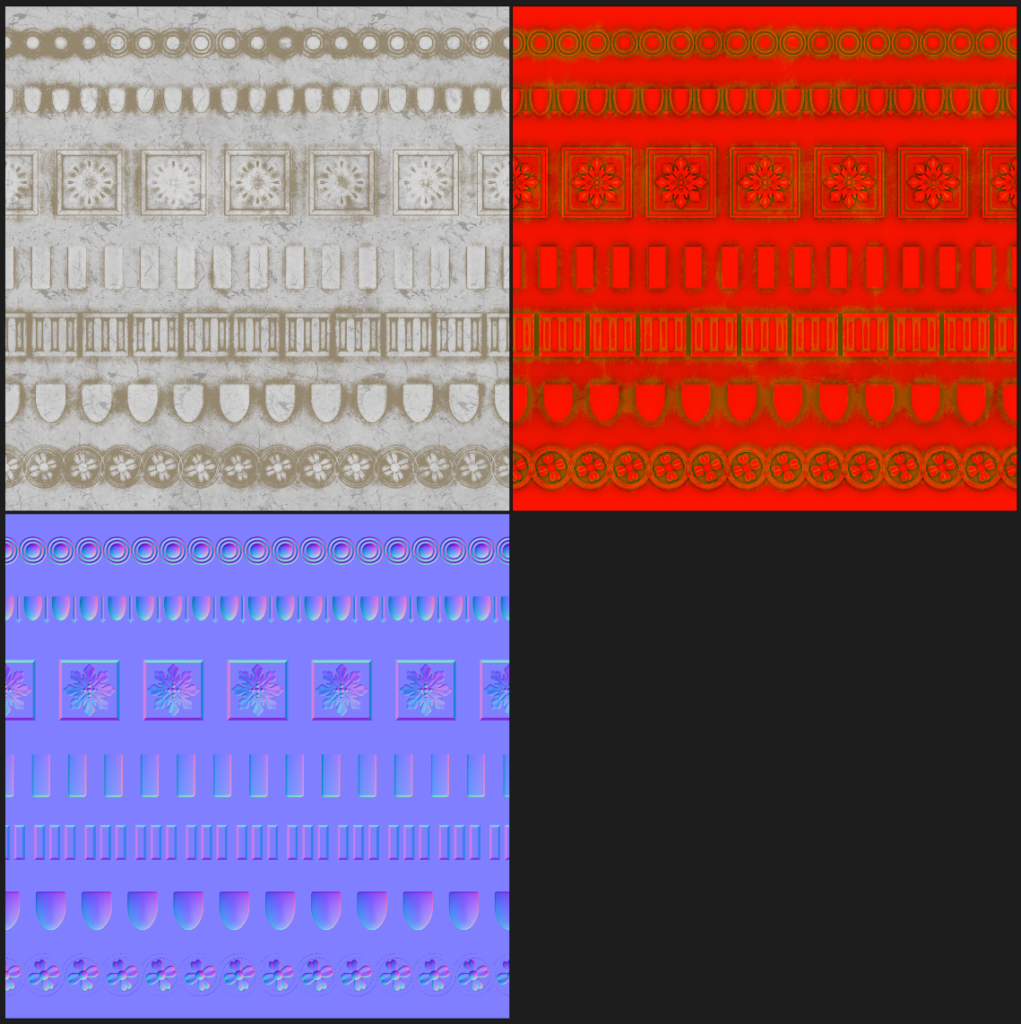
05 – Designing the Trim Sheet
The original model used geometry to describe most of its surface detail. While this worked for the initial study, it was not an efficient solution for a modular environment.
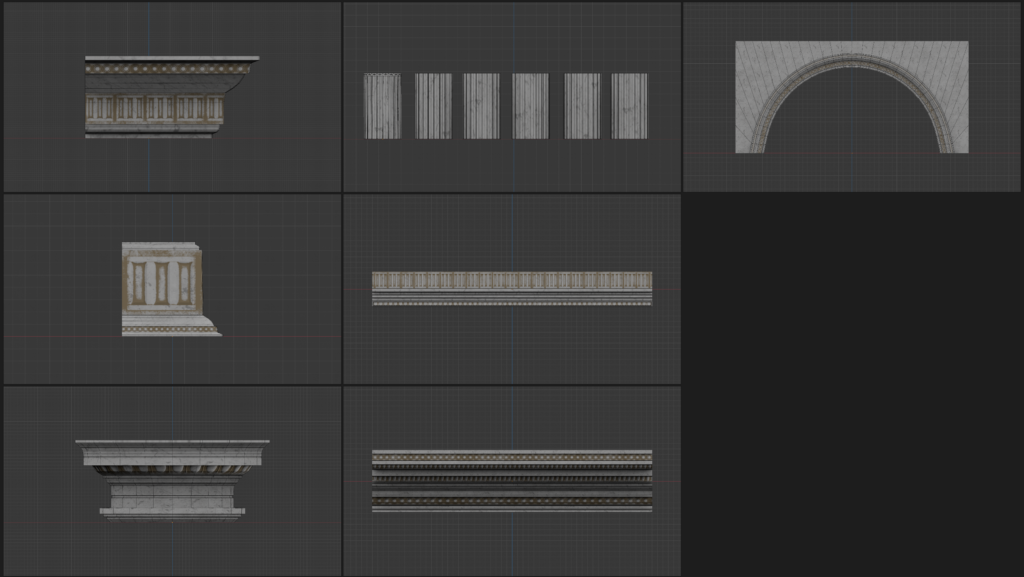
I moved the recurring decorative information into a shared trim sheet.
Different strips were designed to represent edges, frames, carved details and stone transitions that could be reused across several meshes.
The UVs of each module were then aligned to the appropriate sections of the texture.
This allowed multiple architectural pieces to share the same material while maintaining a consistent visual language.
The trim sheet reduced the need for unique textures and unnecessary geometry, while making it easier to create new pieces based on the same architectural style.
05 – Real-Time Validation
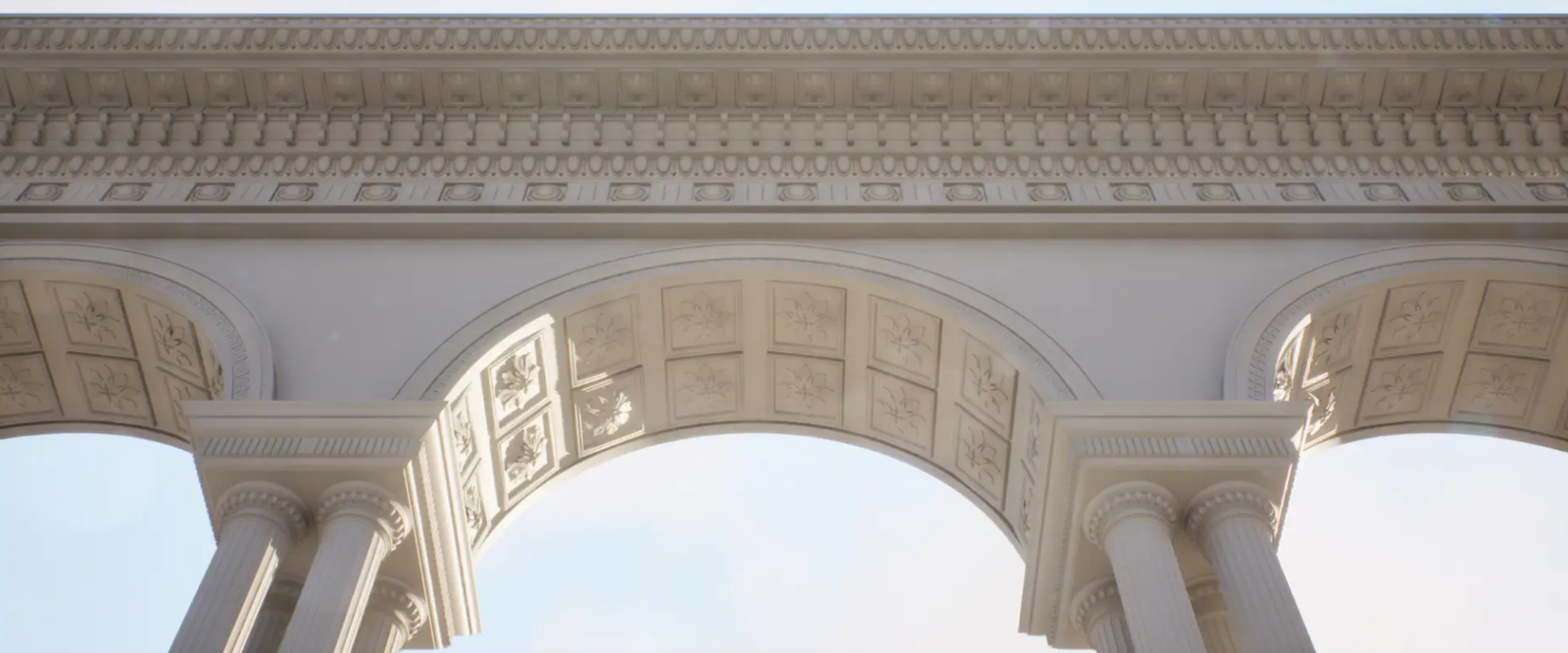
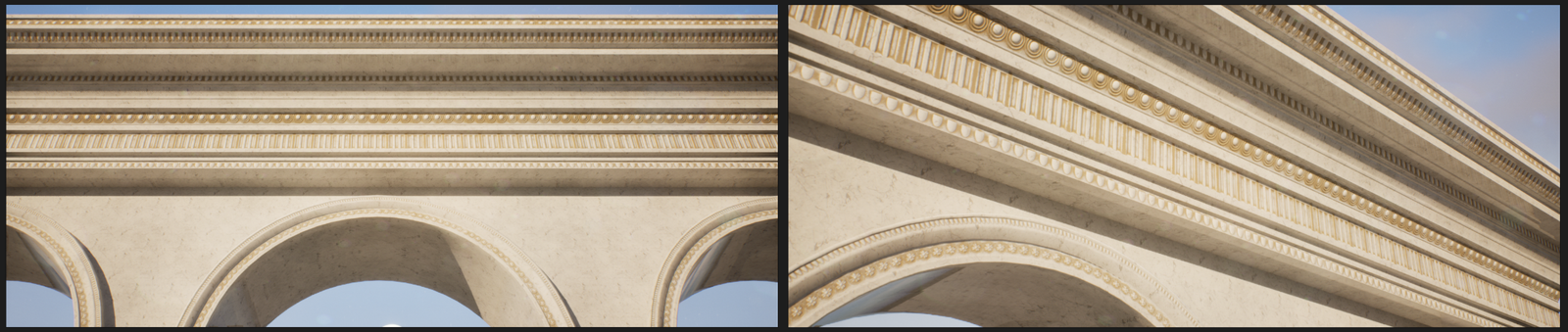
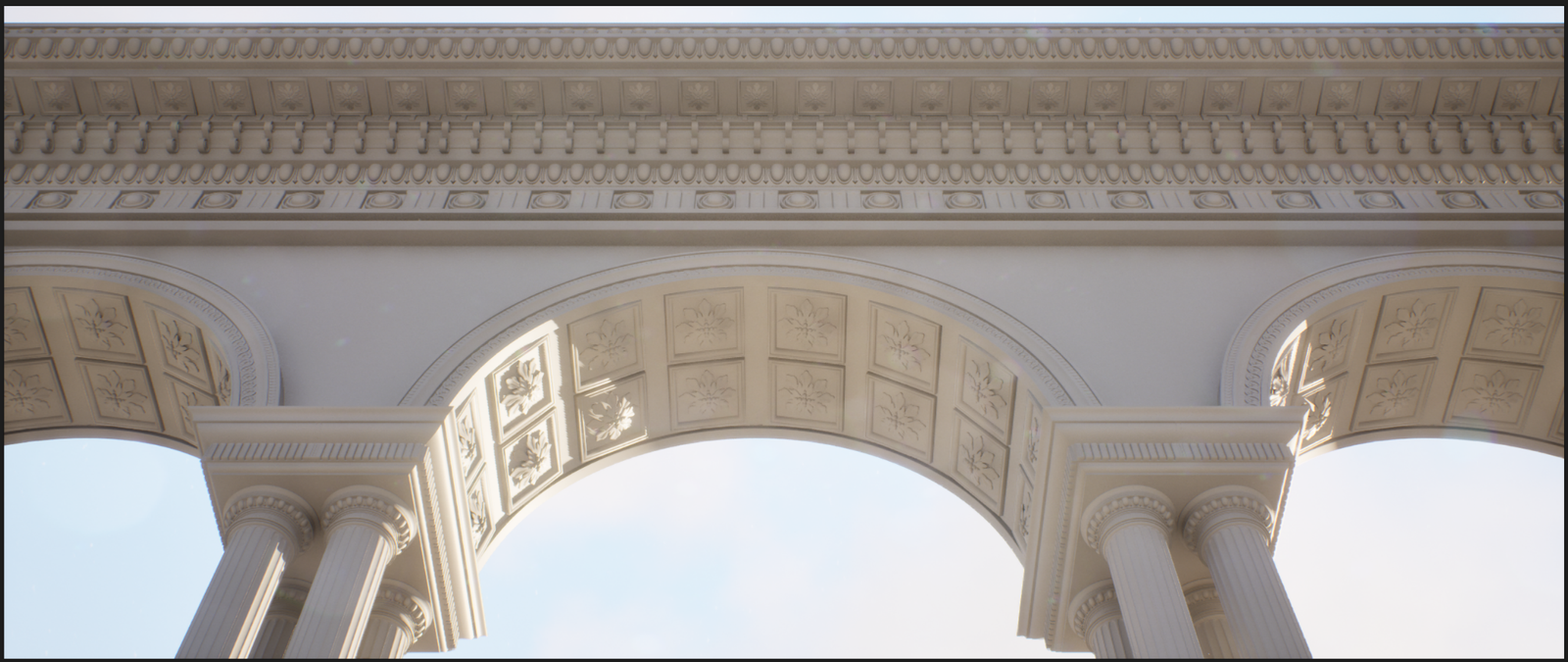
Once the modular pieces and shared material were ready, I imported the updated assets into Unreal Engine 5 and used them to assemble the final architecture.
Working directly in engine made it possible to test different combinations quickly and identify visible repetition, proportion issues or areas that required additional variation.
Lighting was also an important part of the validation process.
The deep profiles and layered shapes of Gothic architecture rely heavily on shadow, so the final test focused on making sure that the forms remained readable without depending on excessive geometric complexity.
The result is a reusable foundation for Gothic environments rather than a single finished building.
This study became an important step in the way I approach environment art.
Rather than separating artistic modelling from technical optimisation, I now try to develop both aspects together from the beginning: defining the visual target, recognising repeated patterns and creating workflows that make future iteration easier.
Modular Gothic Architecture
Overview
This project began as a small modelling exercise inspired by a video showing the construction of a Gothic arch in Blender.
My first version focused entirely on shape and ornamentation. The result was visually interesting, but it was also extremely dense, difficult to edit and unsuitable for a real-time environment.
Instead of treating it as a finished standalone asset, I used it as the starting point for a broader technical study: how could I preserve the visual identity of Gothic architecture while turning it into a modular, reusable and game-ready system?
The final workflow combines modular modelling, procedural experimentation, a shared trim sheet and continuous testing inside Unreal Engine 5.
Workflow
01 – Starting from the Shape
The project started with the silhouette of a Gothic arch.
At this stage, I was mainly interested in understanding how pointed arches, repeated frames and decorative layers could be constructed in Blender.
I worked freely, prioritising the visual result rather than topology or performance.
This approach helped me study the architecture, but it also produced a very dense asset composed of several overlapping details.
02 – The First Unreal Engine Test
Although the first model was still high-poly and unoptimised, I imported it into Unreal Engine 5.
Testing the asset in engine immediately gave me information that was difficult to judge inside the modelling software alone.
I could evaluate its scale, silhouette, depth and behaviour under real-time lighting.
More importantly, this test exposed the main limitation of the original workflow: the asset worked as an isolated piece, but it was not flexible enough to support an entire environment.
03 – From Asset to Modular System
I began rebuilding the architecture as a collection of reusable components.
Instead of modelling every structure as a unique object, I separated the design into architectural modules that could share dimensions, materials and connection points.
This changed the way I approached the project. I was no longer designing only one Gothic arch;
I was defining a visual language that could be reused to create multiple architectural configurations.
Working with consistent proportions also made the pieces easier to assemble, replace and iterate on inside the engine.
04 – Exploring Geometry Nodes
The project also became an opportunity to explore Geometry Nodes and procedural modelling.
Gothic architecture contains many repeated elements and proportional relationships.
Rebuilding each variation manually would have made the workflow slow and difficult to maintain.
I therefore started experimenting with procedural controls for repetition and shape variation.
The goal was not to automate the entire asset, but to identify the repetitive parts of the process and make them faster to edit.
This allowed me to approach modelling less as a sequence of isolated operations and more as the construction of a reusable system.
05 – Designing the Trim Sheet
The original model used geometry to describe most of its surface detail. While this worked for the initial study, it was not an efficient solution for a modular environment.
I moved the recurring decorative information into a shared trim sheet.
Different strips were designed to represent edges, frames, carved details and stone transitions that could be reused across several meshes.
The UVs of each module were then aligned to the appropriate sections of the texture.
This allowed multiple architectural pieces to share the same material while maintaining a consistent visual language.
The trim sheet reduced the need for unique textures and unnecessary geometry, while making it easier to create new pieces based on the same architectural style.
06 – Real-Time Validation
Once the modular pieces and shared material were ready, I imported the updated assets into Unreal Engine 5 and used them to assemble the final architecture.
Working directly in engine made it possible to test different combinations quickly and identify visible repetition, proportion issues or areas that required additional variation.
Lighting was also an important part of the validation process.
The deep profiles and layered shapes of Gothic architecture rely heavily on shadow, so the final test focused on making sure that the forms remained readable without depending on excessive geometric complexity.
The result is a reusable foundation for Gothic environments rather than a single finished building.
What I Learned
This study became an important step in the way I approach environment art.
Rather than separating artistic modelling from technical optimisation, I now try to develop both aspects together from the beginning: defining the visual target, recognising repeated patterns and creating workflows that make future iteration easier.